


10.07.2026
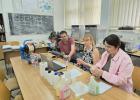
A professional and scientific internship entitled "Testing and Applying Innovative Equipment for Monitoring Algal Blooms in Aquatic Ecosystems" was held June 15–19, 2026, at the Polytechnic University of Timișoara, Romania. This scientific exchange took place as part of the bilateral project between Romania and the Republic of Moldova titled “Monitoring algal blooms aggravated by eutrophic pollution and climate warming in Danube Delta ecosystems” (ALGA-MONITOR), project number 25.80013.5107. 28ROMD, project leader—Corresponding Member of the Academy of Sciences of Moldova, Prof. Dr. hab ...
23.06.2026
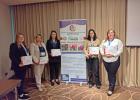
Five researchers from the Laboratory of Systematics and Molecular Phylogeny, Institute of Zoology, Moldova State University, participated in the 19th edition of the International Symposium "Current Trends in Natural Sciences", organized between May 21-23, 2026, by the National University of Science and Technology Politehnica Bucharest, University Center of Pitești, Romania. The symposium brought together participants from several countries in both physical and online formats, including Romania, Republic of Moldova, Ukraine, Lithuania, Hungary, the Czech Republic, Turkey, Egypt and others ...

19.06.2026
Scientific researchers Sorina Istrati and Ecaterina Doni from the Laboratory of Systematics and Molecular Phylogeny of the Institute of Zoology, Moldova State University, participated in the second edition of the International Conference on Biodiversity, Conservation and Climate Change, organized by the Scientific Center for Zoology and Hydroecology of the NAS RA and Yerevan State University, Armenia. The event took place in person from June 9-12, 2026, bringing together international specialists in thematic sessions: Biodiversity Research, Conservation Biology, Ecology and Climate Change. The ...


Moldova State University,
Institute of Zoology
 1 Academiei str.
mun. Chisinau, MD-2028
Republic of Moldova
 +(373 22) 73-98-09
