
- 166 views
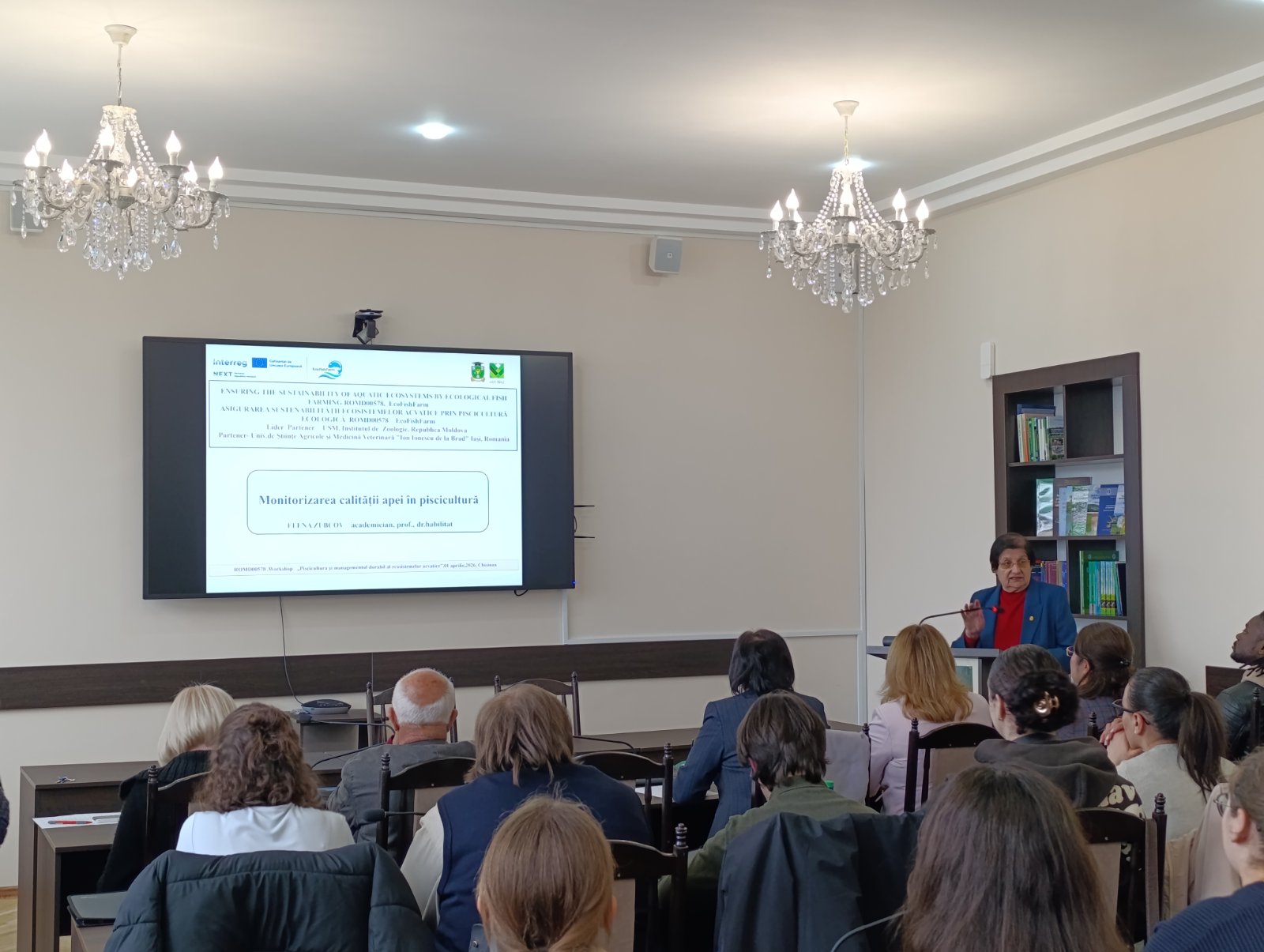
On April 1, 2026, the Institute of Zoology of the Moldova State University organized the workshop “Fish Farming and Sustainable Management of Aquatic Ecosystems” within the framework of the project ROMD00578 „Ensuring the sustainability of aquatic ecosystems through ecological fish farming” – EcoFishFarm (the Interreg VI-A NEXT Romania-Republic of Moldova Programme 2021- 2027, financed by the European Union and co-financed by the participating countries in the Programme). More details about the project can be found at the address https://zoology.usm.md/en/ecofishfarm.
The event brought together 49 participants, of which 24 researchers of the Institute of Zoology and 25 third-year undergraduate students from the study programs Biology, Ecology, Molecular Biology, and Geography, Faculty of Biology and Geosciences of MSU, who are approaching graduation.
The workshop, which was moderated by PhD Lucia Bilețchi, project manager, consisted of two main parts - a presentation session and a practical session in the laboratories of the Institute of Zoology.
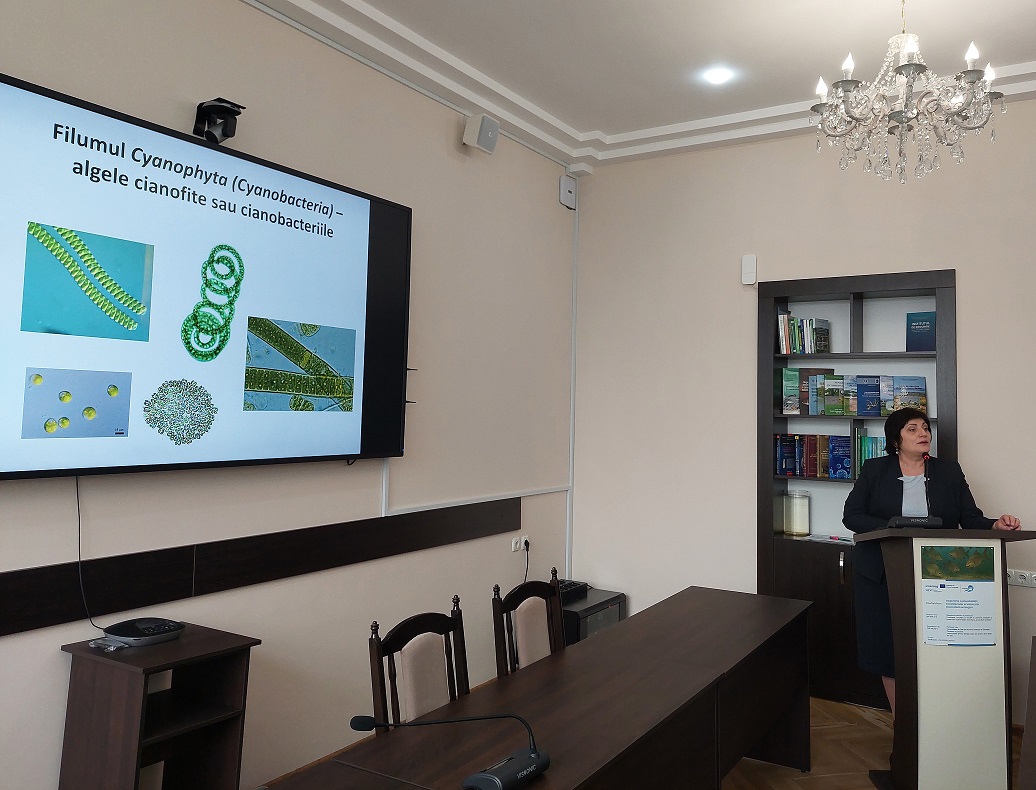
The presentations were delivered by renowned experts in the field: Dr. Hab. Dumitru Bulat characterised the modern fish farming technologies used in the Republic of Moldova, Academician Elena Zubcov highlighted the importance of water quality monitoring in aquaculture, Corresponding Member of the Academy of Sciences of Moldova Laurenția Ungureanu addressed the role of planktonic algae in fishpond ecosystems, and PhD Liubovi Lebedenco emphasized the importance of zooplankton as a natural food source for fish.
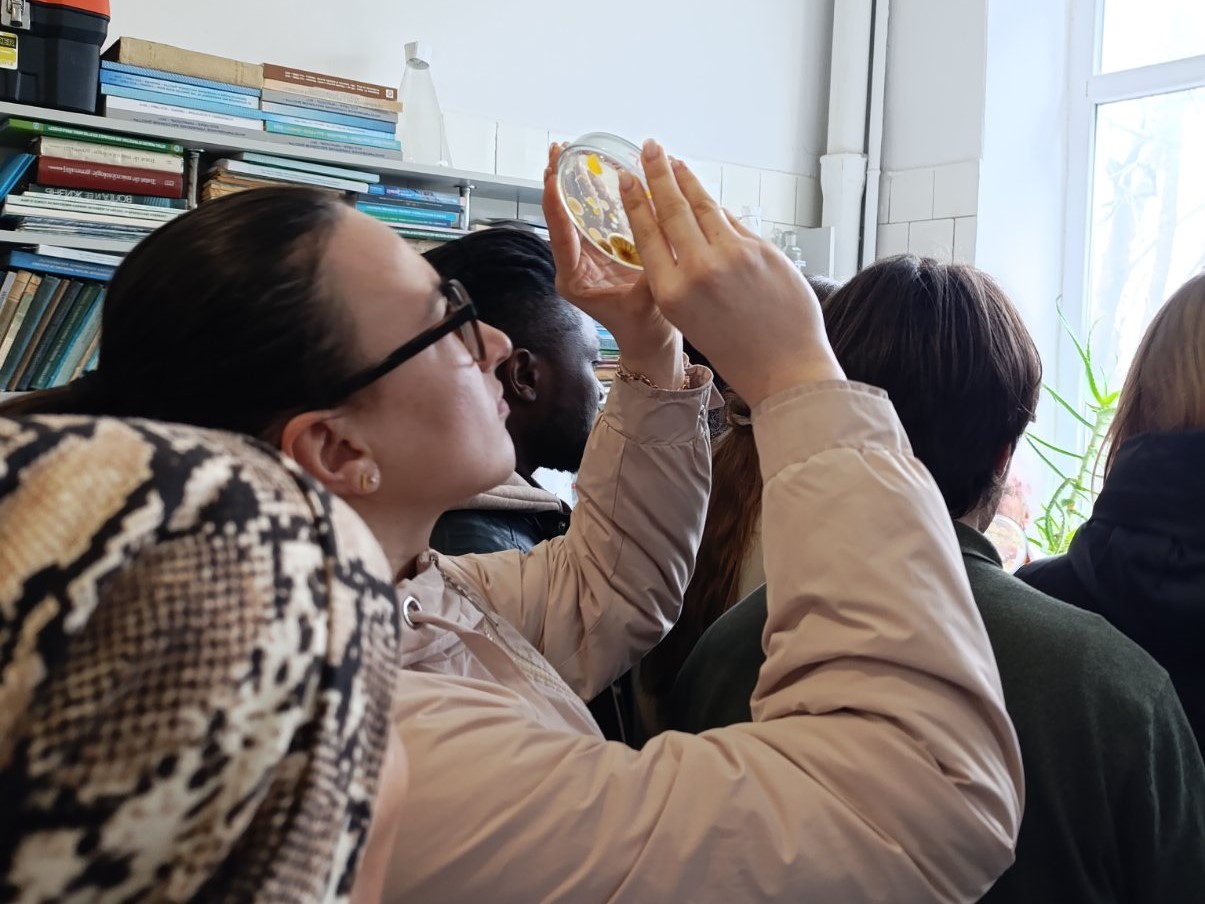
Within the practical session, under the guidance of PhD Olga Jurminskaia, PhD Igor Șubernețkii, PhD Maria Negru (Laboratory of Hydrobiology and Ecotoxicology) and PhD Ion Gologan (Laboratory of Parasitology and Helmintology), the students had the opportunity to explore methods for analyzing bacterioplankton as an indicator of the sanitary status of aquatic ecosystems, as well as the procedure of assessing the state of fish health.
The topics presented during the workshop captured the attention of the participants, as establishing a balance between fish farming, as an economic activity, and environmental protection has always been a challenge for fish farmers, researchers and authorities.
The EcoFishFarm project implementation team would like to sincerely thank PhD Elena Enciu, vice-dean of the Faculty of Biology and Geosciences, for her active involvement in organizing the workshop.
Anastasia Ivanova, Lucia Bilețchi






 1 Academiei str.
 +(373 22) 73-98-09